
How fast can you deploy units after a disaster?
Speed depends on what broke and how many people need service. A single household without a working system might need one standard porta potty rental within hours. A shelter standing up overnight needs a dozen units plus a handwashing station rental before the doors open. We prioritize calls where sewage backup or contamination has already started, because that is the scenario OSHA 1926.51(c) exists for: it sets toilet ratios so people are not standing in line while a facility overflows.
Paradise sits inland from the flood corridors that hit harder in Henderson, 13.1 miles southeast, but power loss still knocks out well pumps and lift stations here regularly. When that happens, a septic system backs up fast, and a septic pumping service call gets it moving again before the tank overflows into a yard or a basement. If the whole system needs bypassing while repairs happen, a holding tank rental buys time. For a household that has gone days without a working bathroom, an emergency porta potty rental beats waiting on a plumber's schedule.
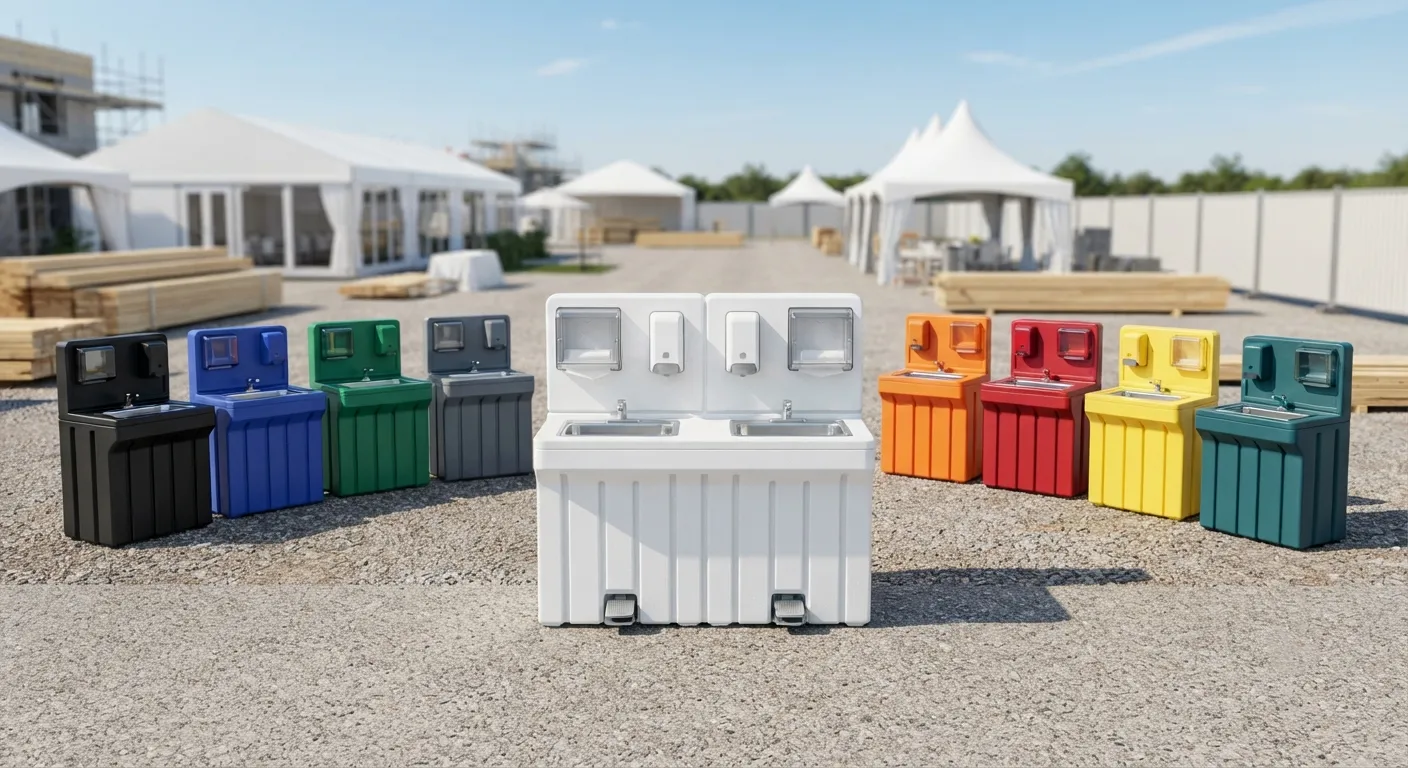
Shelters and command posts need more than toilets. Responders eating and prepping food on site need clean hands, and 29 CFR 1910.141(d)(2) is specific: soap and towels, not sanitizer alone. A portable sink rental or a bank of hand sanitizer station rental units covers different parts of that need, and most command posts end up ordering both.
What do shelters and command posts actually need?
Numbers first. A shelter housing evacuees needs restrooms sized to headcount, not guesswork, and the how many porta potties do i need guide walks through that math using the same ratios OSHA applies to job sites. For an event-scale shelter, a 4 stall restroom trailer or 8 stall restroom trailer handles higher traffic better than a row of standard units, especially if the shelter runs for more than a few days. Trailers with running water also make it easier to hit the handwashing requirement without adding separate stations.
Accessibility does not get waived during a disaster. ADA Standards section 213.2 requires that where single-user units are clustered, at least 5 percent be accessible, never fewer than one. An ADA accessible porta potty has a 60 inch turning circle per ADA Standards section 304.3.1, which matters when evacuees include wheelchair users or people on stretchers. We do not treat that as optional just because the order came in overnight.
Debris follows every disaster. Downed trees, gutted drywall, ruined furniture: it has to go somewhere, and a roll-off dumpster rental clears a site faster than truckloads to the curb. A 20 yard dumpster rental handles a typical household cleanup; a 30 yard dumpster rental or 40 yard dumpster rental suits a commercial loss or a multi-home block. Know before you fill it: our what cannot go in a dumpster page covers hazardous items that disaster debris often includes, like batteries, propane tanks and certain chemicals.
Command posts also need secure storage for equipment and records, and a storage container rental keeps gear out of the weather between shifts. Some agencies set up a mobile office trailer rental as a base of operations, with a temporary fence rental around the perimeter to keep the site secure once the crowd shows up.
| unit | duration | typical price |
|---|---|---|
| standard | day | $150 |
| standard | week | $200 |
| trailer | week | $1,397 |
| dumpster | week | $600 |
| ada | day | $230 |
Why does site setup matter more during a disaster?
Because ground conditions are worse and crews are moving faster than usual. A roll-off delivery still needs about 60 feet of straight clearance behind the truck, disaster or not, and that does not change when a driveway is blocked by debris. Lighting also gets skipped in the rush, but OSHA 1926.56(a) sets minimum illumination for work areas, and a light tower rental covers a staging area after dark. If the grid is down, a temporary power pole keeps lights, pumps and radios running. Placement still needs a plan; our porta potty placement guide applies just as much on a disaster site as a construction one.
For events that get relocated because of a disaster, or relief efforts tied to a scheduled gathering, see disaster relief sanitation planning alongside construction site services for the debris and power side. Paradise crews responding from outside the immediate area can check service areas for coverage details, and anyone comparing costs before committing should start with porta potty rental cost.
How much does emergency sanitation cost during a disaster?
A standard unit runs $150 to $350 a day depending on urgency and location, and rush delivery adds $100 to $500 on top. Septic pumping during an emergency falls between $150 and $300 a day. Ask about weekend rates if the crisis hits on a Friday.
Can you deliver the same day for an emergency?
Often, yes, especially for standard units already staged nearby. Trailers and larger dumpsters take longer to schedule. Call early and tell us exactly what failed, sewage backup, power loss, flooding, so we route the right equipment first.
Do you provide ADA units for shelters?
Yes. Shelters clustering portable units must include accessible ones under ADA Standards section 213.2, and we stock units meeting ADA Standards section 404.2.3 for door width. Tell us headcount and we size the ADA ratio correctly.
What if the disaster damaged our septic system?
Call for pumping or a holding tank bypass immediately. A backed-up tank contaminates groundwater fast, and waiting makes the cleanup worse. We prioritize septic emergencies over routine service calls.
Will you work with insurance or FEMA paperwork?
We can provide invoices and service records for reimbursement claims. Ask your adjuster what documentation they need before service starts, since requirements vary by policy and by agency.
Next step
Get a delivery date
Tell us the address, the dates and the headcount. We size the order and confirm the route.