
Where should a porta potty be placed on a job site?
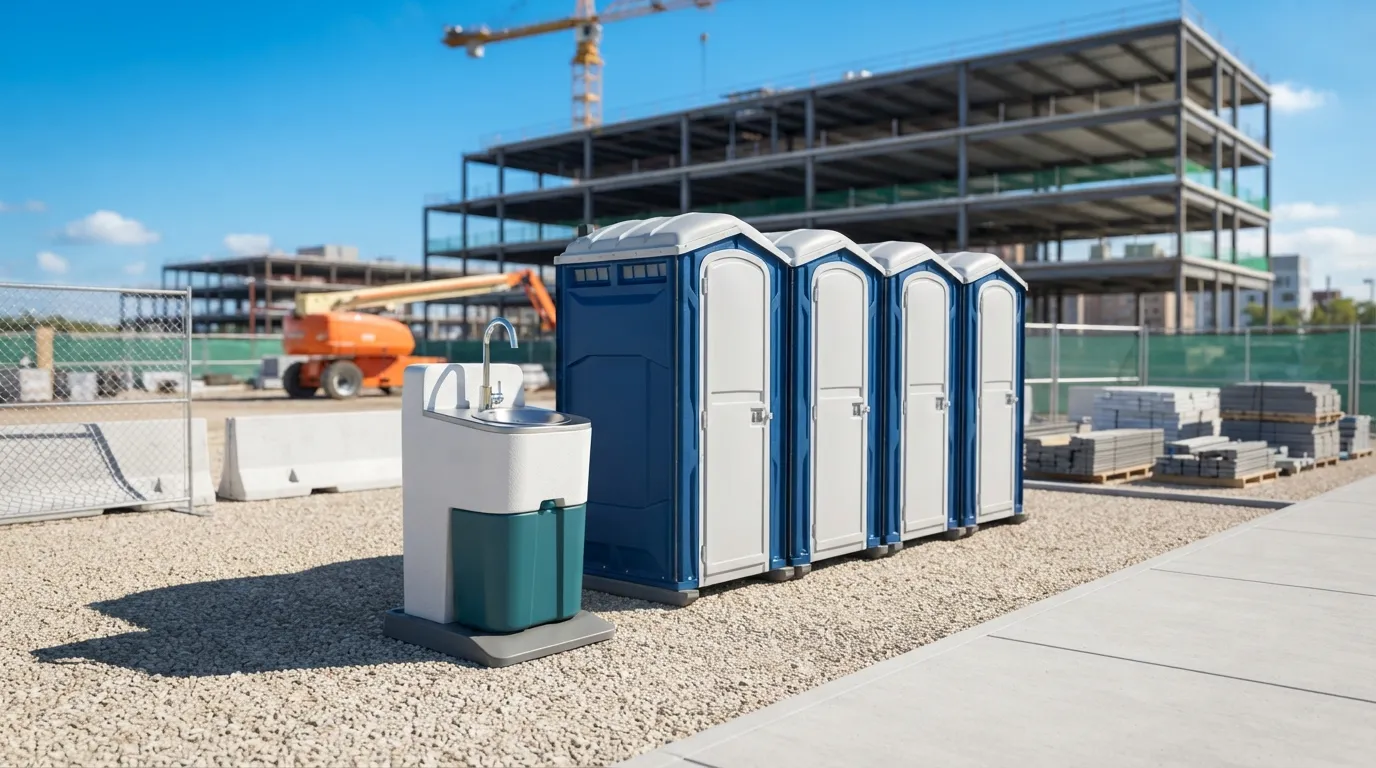
Put it on level, compacted ground, away from storm drains, and close enough that workers actually use it instead of skipping the walk. OSHA 1926.51(c) sets the ratio at one toilet for 20 workers or fewer, so placement has to serve that whole crew without forcing a long trek across the site. A standard unit runs about 44 by 48 inches on the ground and stands roughly 92 inches tall, so give it a little more room than you think for the door swing and the service tech's cart. If the unit sits near an active grading area, OSHA 1926.25 housekeeping rules mean the path to it needs to stay clear of scrap and debris, not just at delivery but every day after. For jobs with painting, coatings, or pesticide work happening nearby, OSHA 1926.51(f)(1) requires a washing station too, separate from the toilet itself. We place standard units and deluxe flushable models across Paradise job sites daily, and the same placement logic applies whether it is a single unit or a bank of six for a construction site.
Do I need a permit to place a porta potty on the street or sidewalk?
If the unit sits in the public right of way, curb, sidewalk, or street frontage, that placement needs confirming with the city before delivery. Paradise does not have a blanket published fee schedule we can point to here, so treat any right-of-way placement as a call-first situation, not a guess. This is different from a dumpster placement permit, which is its own process with its own cost structure, and neither should be assumed from a neighboring city's rules. If you are staging a temporary fence around the unit for security or crowd control, that fencing footprint sometimes falls under the same right-of-way question, so check both at once. For event restrooms or a festival setup near a public street in Paradise, get that confirmation in writing before you commit to a layout. Our porta potty permit requirements page walks through what to ask the city, and we will help you make that call if you are ordering through Paradise Porta Pros.
How much clearance does a delivery truck need?
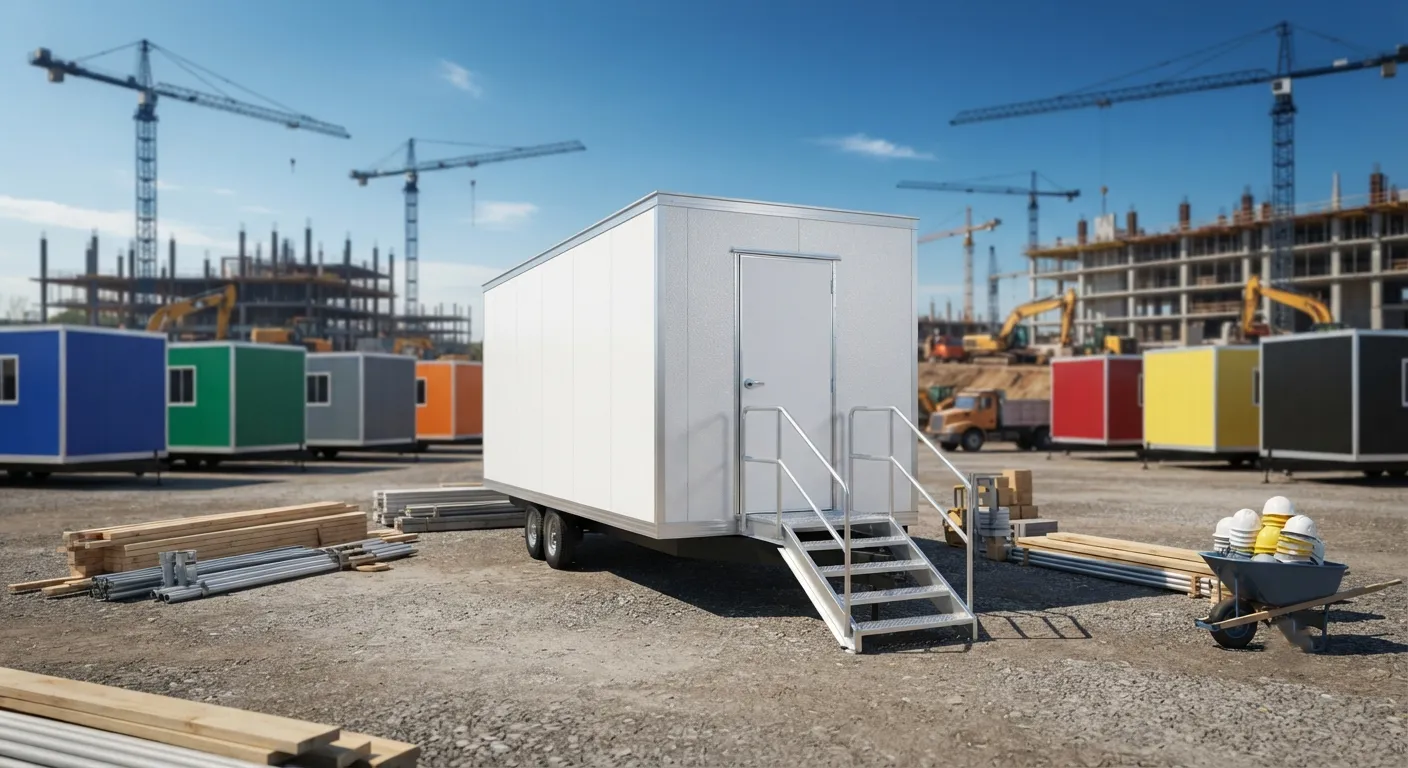
A roll-off delivery truck needs about 60 feet of straight clearance behind it to set a container down safely, and a portable restroom delivery needs a similar approach even though the unit itself is smaller. That clearance matters most on tight residential lots or crowded event grounds where trailers, generators, and light towers are already competing for space. If you are 5.6 miles north in Winchester or 6.7 miles east in Whitney, the same clearance rule applies, distance from our yard does not change the physics of backing up a truck. Storage assets need the same planning: a 20ft storage container or a mobile office trailer both need flat, accessible ground, and if an older mobile office trailer on site has damaged or misaligned mobile office trailer replacement doors, that is worth flagging before delivery day so our crew does not have to work around a door that will not close. For ADA units, ADA Standards section 403.5.1 requires a 36 inch clear route to the unit, and section 304.3.1 calls for a 60 inch turning circle in front of it, so plan that space into your layout from the start, not after the units are already sitting on site.
What surface and slope does a portable restroom need?
Flat and stable is the short answer, and ADA Standards section 302.1 backs that up for accessible units specifically: the ground has to be firm and slip resistant, not gravel that shifts or grass that turns to mud. Where units are clustered, ADA Standards section 213.2 requires at least 5 percent to be accessible, never fewer than one, so if you are placing ten standard units for a county fair or marathon in Paradise, at least one has to meet that clear-route and turning-circle standard. Ramps into accessible units cannot run steeper than 1:12 per ADA Standards section 405.2. If you are running a handwashing station alongside the units and it uses an Ozark River basin, keep a set of ozark river portable sink replacement parts on hand, gaskets and pump lines wear out mid-season and a dead sink stalls a whole crew. Septic access matters too: a holding tank or grease interceptor needs truck access for pumping, similar to how a placerville septic pumping service would plan a route to a rural tank, distance and grade both factor into whether the truck can get in and out without tearing up the yard.
Does the unit need to sit level, or is a slight grade okay?
A slight grade is fine as long as the unit sits flat and does not lean, since a lean can cause the tank to sit unevenly and shorten service life. Compact the ground first if it's soft. Our delivery crew checks this on-site before setting the unit down.
How far from the work area can a porta potty be placed?
Keep it within 100 feet of the crew whenever possible. Further than that and workers stop using it consistently, which defeats the point of meeting OSHA 1926.51(c) in the first place. Tight urban lots sometimes force compromises; call us and we will help plan around it.
Can a porta potty go on a sidewalk in Paradise?
Only with city confirmation first. Sidewalk and street placement falls under right-of-way rules that vary by exact location, and we do not have a blanket answer to give without that call. Ask before delivery, not after.
What about placement for events with large crowds?
Plan one accessible unit per cluster minimum, per ADA Standards section 213.2, and space standard units so no guest walks more than a couple minutes to reach one. Our festival restroom and concert restroom planning covers layout in more detail.
Do storage containers and fencing need the same placement care?
Yes. A storage container needs flat ground and truck access just like a restroom unit, and temporary fencing around a Paradise site needs to avoid blocking that same clearance path for delivery and pump trucks.
Next step
Get a delivery date
Tell us the address, the dates and the headcount. We size the order and confirm the route.